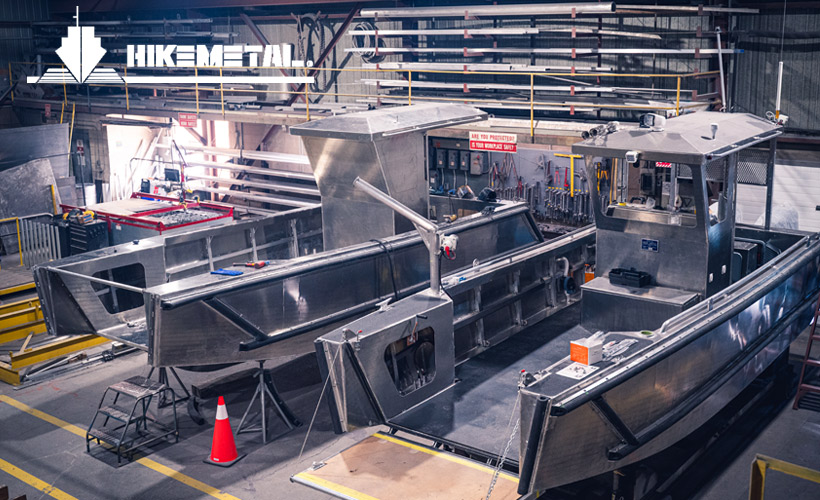
Every commercial ship starts as an idea and ends as a working structure that carries cargo or people across open water. The journey between those two points follows clear Marine Architecture & Boat Design Principles. Naval architecture is the practice of designing a vessel’s hull, superstructure, and internal layout. It brings together hydrodynamics, structural engineering, and marine systems in one plan. It also works closely with marine engineering, the field that designs a ship’s machinery and propulsion system. The goal is simple. A ship must float, stay stable, move efficiently, and keep its crew and cargo safe. Hike Metal Products uses these principles to turn a rough vessel concept into a detailed, buildable design.
What Naval Architecture Covers
Naval architecture pulls from several fields at once. Engineers study how water flows around the hull, how steel plates carry heavy loads, and how systems like propulsion and ballast work together. Each choice affects the others. A heavier engine adds weight. A wider hull lowers speed. The designer balances these trade-offs at every stage.
Commercial vessels fill many roles. Container ships carry freight. Tankers move liquid cargo. Ferries carry passengers and vehicles. The same rules guide specialized craft too, from a search and rescue boat to a naval submarine. Submarines are a special case. These vessels must stay stable both on the surface and deep underwater, so architects give submarines strong pressure hulls and test how submarines behave at depth before construction begins. Every vessel type needs its own design approach, yet they all rest on the same engineering foundation.
Naval architecture serves many industries:
- Shipping and freight, which need large hulls and high cargo capacity.
- Offshore energy, which depends on stable platforms and supply vessels.
- Defense, which includes surface warships and the submarine fleet.
Each of these industries needs vessels that stay safe and cost less to run. The work blends art and science. An architect reads sea conditions, cargo needs, and port limits, then shapes a hull for that exact job before any steel is cut.
The Ship Design Spiral
The ship design process rarely moves in a straight line. Instead, architects use a repeating method called the Design Spiral. One change often forces a fresh look at earlier choices. A new hull shape, for example, changes the ship’s resistance, which then affects engine choice and fuel capacity. Designers loop through the same questions again and again and improve the vessel with each pass. This repetition catches problems early, while they still live on paper and cost little to fix.
The process moves through three main phases.
Concept Design: This phase sets the vessel’s mission requirements. Architects fix broad targets for cargo tonnage, speed, cruising range, and operating conditions. A feasibility study then checks whether the design concept can meet these mission requirements at a workable cost.
Contract Design: This phase turns the concept into exact specifications. Once feasibility is proven, engineers lock in the general arrangement, prepare early weight and tonnage estimates, and run first-pass structural analysis to confirm the design meets international maritime codes.
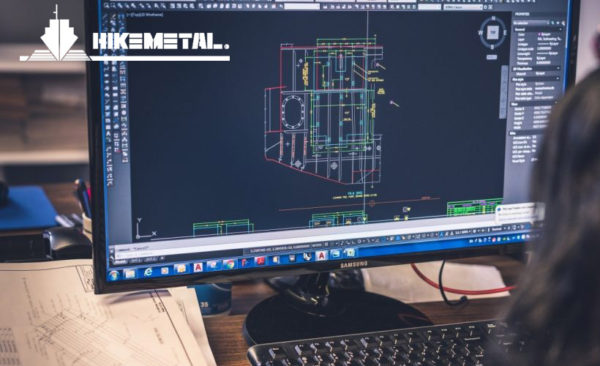
Detail Design: This final phase produces working CAD drawings. Teams work with the shipyard to map plating cuts, pipe routing, and electrical wireways. These drawings guide the actual build.
Each phase adds detail. Concept design paints the broad picture. Contract design sets the rules. Detail design gives the shipyard the exact information it needs to build the vessel. The spiral links all three, so a late find in detail design can send the team back to the concept. Good architects treat that loop as a strength, not a delay, because each pass yields a stronger and safer ship. Hike Metal Products follows this same disciplined loop and refines each design until it is ready for the shop floor.
Core Engineering Principles
Four pillars support the safe operation of any commercial ship. Architects address each one throughout the design and weigh each against the others.
Hydrostatics and Stability
A vessel must float and stay upright, even in heavy seas. Architects calculate the center of gravity and the center of buoyancy to keep the ship balanced. They also build in reserve buoyancy, the watertight volume above the waterline. This volume acts as a safety buffer when waves push the ship down or when water floods in. They measure the ship’s displacement, the weight of water the hull pushes aside, and confirm it matches the total tonnage of the loaded vessel. Good seakeeping keeps the ship steady and comfortable as waves grow. Strong stability work marks the difference between a ship that rides out rough weather and one that does not.
Hydrodynamics: Resistance and Propulsion
Water resists any moving hull, and this ship resistance climbs quickly as the vessel speeds up. Architects study the interaction between the hull and the water to lower ship resistance. The hull form drives the result. A fine, smooth hull form cuts drag and saves power. This study also shapes the engine and propeller choices, which together form the propulsion system. A well-matched hull and propeller cut fuel use and lower operating costs across the vessel’s whole service life. Architects test hull shapes with computer models and tank trials before construction begins.
Structural Hierarchy
Waves put massive bending forces on a ship’s body. Ship structures must resist these forces, so architects run detailed structural analysis on the hull and treat it as a layered system. Plates form the outer skin. Stiffeners, beams, and web frames back those plates and grow in size to match the loads they carry. This layered build lets the ship structures take heavy stress without buckling. Like other marine structures, the hull depends on this rigid hierarchy for its strength. During shipbuilding, welding fuses the plates, stiffeners, and frames into one continuous hull. Marine engineering teams then install the engines, pumps, and electrical systems inside it.
General Arrangement
The general arrangement, or GA, maps the ship’s interior. Architects split the hull with watertight bulkheads to limit flooding if the hull is breached. They place the engine room, cargo holds, and ballast tanks with care. Correct placement keeps the ship in proper trim and balance, whether it sails empty or fully loaded. The GA also plans safe crew routes, clear access for maintenance, and smooth cargo flow during loading and unloading. A strong layout makes the ship easier to run and safer for everyone aboard.
Rules, Standards, and Oversight
Commercial ship design follows strict outside rules. International bodies and Classification Societies set and enforce these standards. The American Bureau of Shipping (ABS) is one well-known example. These groups review designs for material quality, fire safety, and pollution control. A vessel must meet these requirements before it can operate at sea. Hike Metal Products builds to these classification standards, including ABS and Lloyd’s Register, so every vessel clears inspection.
This oversight protects crews, cargo, coastlines, and the owner’s investment. Designers treat these codes as fixed limits and work within them from the first sketch.
Useful references for anyone who studies the field include:
- The U.S. Bureau of Labor Statistics, which outlines the daily work of marine engineers and naval architects.
- MIT OpenCourseWare, which shares foundational course material on ship design and marine engineering.
- Classification Society rule books, which document current standards for construction and safety.
Why Sound Design Matters for Owners
A well-designed vessel earns its keep every day it operates. Good hydrodynamics lower fuel bills. Sound structure cuts repairs and extends service life. Careful stability work protects the crew and cargo. Owners who invest in strong early design avoid costly changes later, because fixing a flaw on paper costs far less than fixing it in steel.
Design quality also shapes resale value and regulatory approval. A vessel built on proven engineering holds its worth over time and clears inspections with fewer delays. In a market where fuel and downtime drive the biggest costs, careful design pays the owner back year after year.
Start Your Vessel Project the Right Way
Strong Marine Architecture & Boat Design Principles turn a rough concept into a safe, efficient, and profitable vessel. Hike Metal Products offers complete vessel design services and brings hydrodynamics, structural engineering, and marine systems together in one clear plan built for your mission.

Call Hike Metal Products at 519-825-4691 or email sales@hikemetal.com to discuss your vessel and take the first step from idea to open water.