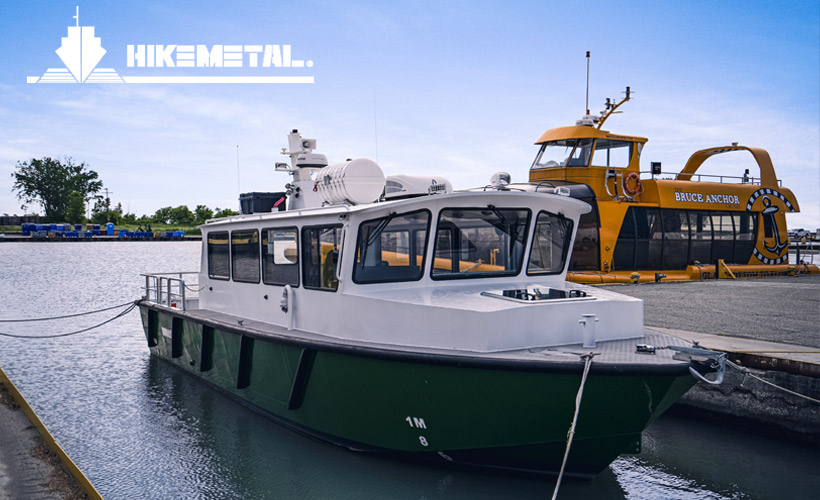
Passenger boat construction in Ontario connects owners with shipyards that build commercial vessels for ferries and water taxis. Every build must meet federal marine rules before passengers step on board. Hike Metal Products has built vessels of 10 to 30 metres at its Wheatley office since 1958, the rules built in from day one.
What Passenger Boat Construction Involves
Passenger boat construction covers design, fabrication, navigation, and certification. Commercial vessels carrying paying persons face strict Canadian law. The Canada Shipping Act is the core legislation; later rules add detail. Its sections set each safety requirement, from equipment items to crew drills.
A water taxi turns in a tight space; a ferry of 20 metres carries people and cargo. Each type works within limits set by speed, waves, and conditions. The idea: match the hull to the job. Hike Metal Products assigns a project lead to each build and reports progress weekly.
Vessel Size Classes
Transport Canada groups them by length and weight:
- Under 9 metres: water taxis
- 9 to 15: tour boats and workboat fleets
- 15 to 24: ferries
- Over 24: large-ship rules
The Flowerpot Express, a RHIB of 15 metres, carries 83 persons on board for tour operators on a foam buoyancy collar.
Certification and Registration
Transport Canada Marine Safety inspects commercial vessels and issues the certificate owners renew. It states persons carried, length, and limits. Tonnage decides which sections apply. Gross tonnage measures volume; small hulls use a simplified method a footnote explains. Hike Metal Products runs the tonnage calculation, files paperwork, and books the survey.
Vessel Registration is a separate requirement. A corporation registers the business name and an Authorized Representative; a sole proprietor uses personal identification. The Vessel Registration record names that representative; the yard preps the documents.
Builder and Import Duties
Canada treats builder and importer alike: each vessel needs a declaration of conformity, which the builder signs and files at a Transport Canada Centre. An importer of a foreign hull proves standards, filing hull type and condition. Clients of Hike Metal Products skip this; the yard is the builder and files the declaration.
The Ship Safety Bulletin
One bulletin tightened the lifejacket rule; another clarified stability tests. Transport Canada posts each bulletin online with the source. Hike Metal Products folds each into its compliance practices; a missed Safety Bulletin can suspend the certificate.
Environmental and Spill Rules
Pollution rules sit beside safety rules. The law sets a pollution rule for every hull: no oil discharge and no raw sewage in protected waters. Builders fit holding tanks and approved separators to limit spills.
Great Lakes environmental conditions shape the design. A hull faces ice, fog, and chop; those conditions drive the freeboard and coatings. Builders study local environmental conditions before scantlings; the rules hold every season.
Lifejackets and Safety Equipment
Safety equipment shapes passenger boat construction, and lifejackets anchor the list. Rules require approved lifejackets for all aboard, plus child lifejackets. Crews stow them in lockers and mark each locker. Gear stays within reach at all times. Operators keep foam and inflatable vests in many sizes.
A lifejacket beats a basic float: its buoyancy rights a person in the water. Crews inspect them daily, swap any with damage, and log it in the report. The regulations list rescue and distress items in two groups:
- Approved lifejackets for every person on board
- A sound appliance and backup sound device, with instructions
- Rocket parachute distress flares in a dry locker
- A throw bag with a buoyant line for a swimmer
- A radar reflector and marker buoy for smaller hulls
- A liferaft for voyages past sheltered waters
Each rocket flare has an expiry; crews check each one and never fire it in drills. The liferaft needs yearly service; crews stow it clear of the deck. A digital selective calling device backs the flares: one button sends an alert with position, cutting response time.
Hull Strength and Watertightness
Builders weld the hull in sections, joining deck to hull. Architects set freeboard and bulwark height so people stay secure in waves. Design limitations match the hull to sea, cargo, and environment.
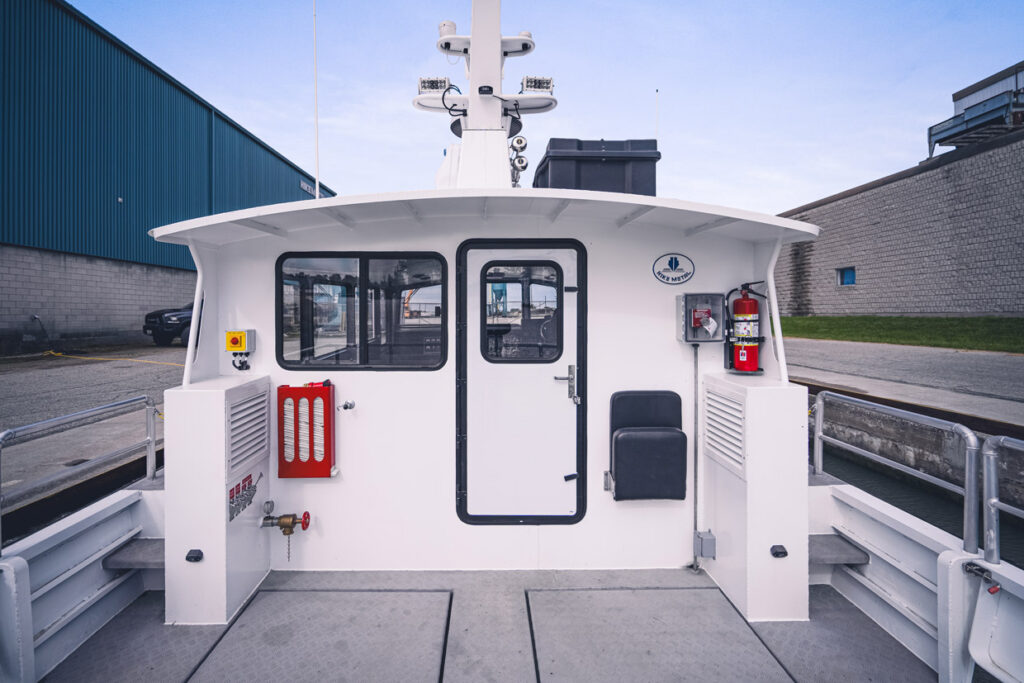
Watertight hatches and doors protect the interior space and integrity. Raised covers drain the deck; escape hatches give each cabin an exit. Weathertight doors seal cabins, alarms guard the machinery space, sliding panels hold in weather. Crews keep hatches and doors closed in rough water; all pass a pressure test. Steep seas test integrity; impact costs more than a survey, so crews report the hull after trips. Each deck wears a non-slip surface; inspectors check every painted surface. A delivery report lists finish quality and seam checks.
Power and Fuel
Diesel suits steel hulls because gasoline vapour sinks low. A gasoline installation needs care: sealed compartments, ventilation, vented lockers. Crews watch fuel condition; clean lines protect the engine and environment. Engine choice and rated power suit the brief: twin engines share the load within hull limits.
Towing Duties
A boat rigged to tow carries extra gear. The rules set the bollard, winch, and towing point above the rudder. A towed vessel keeps slow speed, line clear of the propeller. Open-water work needs a brief and a crew on the signals.
Navigation and Communications
Every passenger vessel carries a compass, navigation lights, and charts on board. Larger builds add electronic navigation, GPS and radar in one station. Lights include a green starboard light at the right height, a gate to starboard, and a white sternlight aft. Collision Regulations govern navigation in fog, where skill, situational awareness, and the ability to signal matter. When visibility drops, the crew leans on charts and watch, so designers keep the sightline clear.
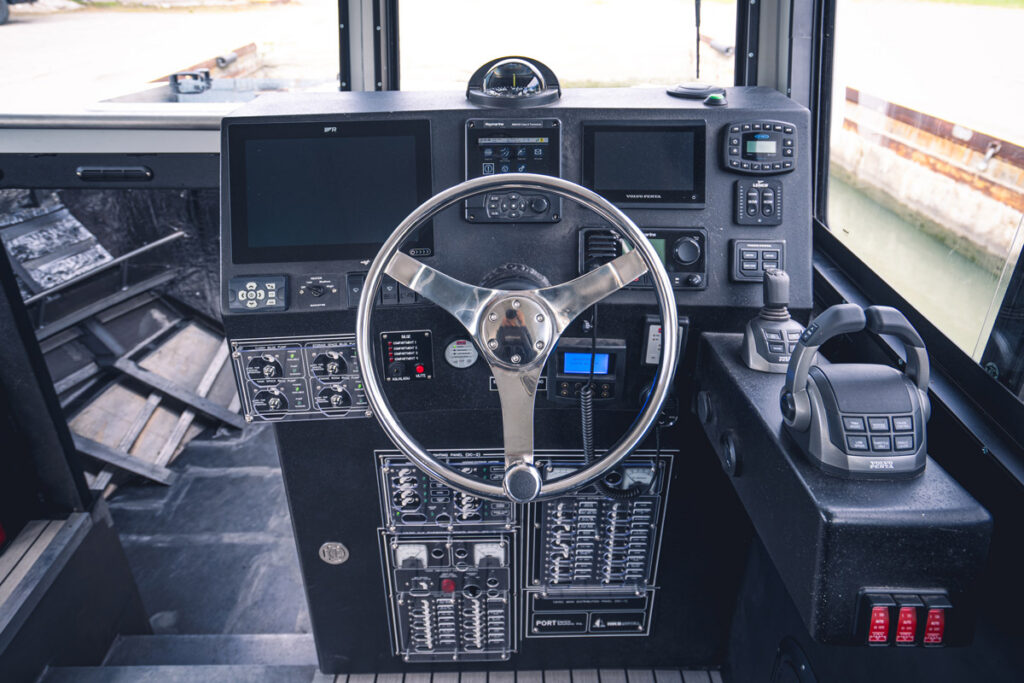
A marine radio anchors the fit: the fixed VHF set guards channel 16 on the 156 MHz band, and a handheld backs it up. Modern VHF radios carry DSC, so one alert names vessel and position. The radio schedule lists each VHF channel across the marine band. Hike Metal Products installs each package and trains the crew on each system, GPS screen to bilge alarm.
Operating Procedures and Crew Drills
Transport Canada Marine Safety requires owners to document safe operation procedures; many use sample templates. The safe operation plan assigns one action per crew member per situation, fire situation to medical situation. It covers docking, watch practices, and passenger care, naming who hands them out. A training manual backs it and lists every drill.
Crew Drills and Tickets
The Marine Personnel Regulations tie crew certificates to sea time:
- The Small Vessel Machinery Operator course, the SVOP ticket, for engine watch
- Competency and first aid certificates for the crew, with hours logged
- Systems training, fire drills, and rescue training before delivery
Crews renew them and file copies at a Transport Canada Centre. Workboat operators follow the same rules. Crews then rehearse drills at set times:
- A briefing on the vests, exits, and emergency instructions for all aboard
- Weekly drills to don lifejackets, check exits, and time each action
A rehearsed crew reads the moment and acts. One trained for an emergency responds at once, passengers reach them, and the crew pass each drill. Safe operation practices, steady maintenance, and clear handovers protect the certificate; each safety check feeds the next survey.
Built in Ontario
Hike Metal Products holds 30-metre vessels in climate-controlled bays; a lift pulls hulls of 25 metres through the season. The Wheatley yard coordinates builds; a Birmingham, Michigan office serves US clients. Clients come aboard for trials; the operating manual stays aboard. The yard recoats each worn surface, grades machinery, stocks gaskets, and renews each registration record. Refits restore the finish; the team handles problems fast.
Start Your Build with Hike Metal Products
Passenger boat construction goes best with a builder fluent in the rules, spill limits, and federal reviews. Hike Metal Products has delivered custom vessel builds for 65 years, from water taxis to coastal ferries, each launched with safety gear stowed, the certificate in hand, full compliance on file, and a trained crew. You gain a vessel built for its work, a clean VHF fit, and a yard meeting every requirement.

Call 519-825-4691 or email sales@hikemetal.com to speak with a representative, request a build plan, and put your next passenger boat construction project in motion.