Buying a working vessel is nothing like buying equipment off a shelf. The Custom Vessel Procurement Process runs through four stages: writing the specification, choosing a shipyard and signing the contract, overseeing construction, and running trials before delivery. Each stage brings technical decisions, regulatory checkpoints, and payments that shape how the vessel performs for the next 25 to 30 years.
Agencies, shipowners, and cargo owners all follow the same path, whether the hull runs patrols or moves freight for maritime logistics. Hike Metal Products has walked every kind of customer through it since 1958, building patrol boats, fireboats, research vessels, and fishing tugs across Canada.
Stage One: Specification and Requirements
What you decide here drives cost and capability more than anything that follows. Shipowners who show up with a clear brief get accurate quotes faster. Starting with just a vessel type is fine too. The same work simply happens later, with help from the shipyard.
Define the Mission Profile
A boat built for calm harbour patrol will not perform offshore. Write down what the vessel has to do before you decide what it should look like. That mission profile drives hull shape, engine choice, stability numbers, and safety gear. It also sets the vessel specifications that every later drawing depends on.
Write down your spec list first:
- Primary job, such as patrol, fire response, search and rescue, survey, or fishing
- Sea state and ice conditions the hull will meet through the year
- Crew and passenger numbers, plus deck loads and mission equipment
- Range, speed, draft limits, and bunker capacity for your operating area
- Route planning assumptions, including transit distances and ports of refuge
Match Requirements to the Governing Bodies
Settle classification at the start, not after the drawings are done. Transport Canada, the American Bureau of Shipping, and Lloyd’s Register each set rules that affect plate thickness, fire safety systems, and the final price. Sort out these items before the drawings move ahead:
- Classification society and flag state, which fix plate thickness and standard equipment
- EEXI and EEDI limits, if your design falls under efficiency rules
- CII & EEOI calculations, which shape hull and engine choices for cargo owners
- Coasting Trade Act eligibility for vessels working Canadian domestic routes
- Survey dates and the inspection cycle the vessel follows after delivery
EEXI and EEDI ratings apply mostly to larger ships. Even so, CII & EEOI calculations increasingly affect how cargo owners charter smaller hulls. Shipowners planning domestic work should confirm Coasting Trade Act status early, since it changes charter options and resale value. Hike Metal Products builds to ABS and Lloyd’s Register standards and is a preferred yard for Transport Canada hull inspections.
Build the Engineering Package
Layout drawings and a bill of materials turn your mission profile into something a shipyard can price. Off-the-shelf components shorten lead times where they suit the job. Record vessel particulars in the same package so classification, insurance, and your Fleet Database all pull from one source.
Stage Two: Contracting and Sourcing
With a specification ready, shipowners choose a builder. Judge yards on technical fit, not price alone.
Evaluate Shipyard Capability
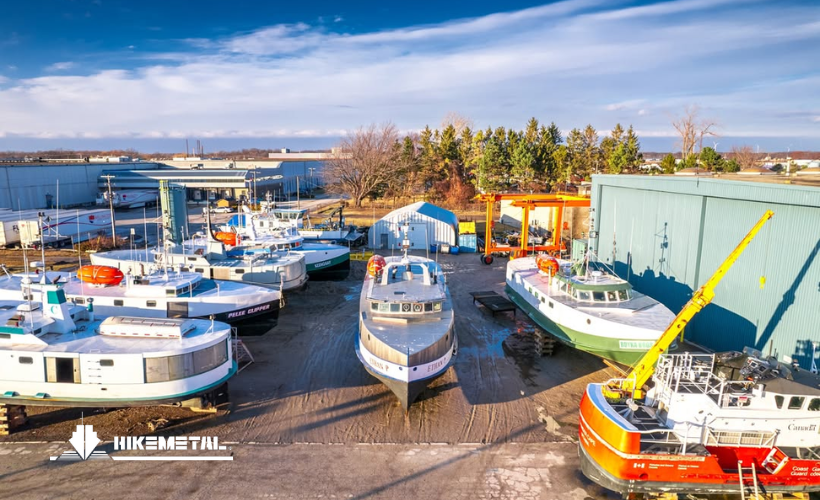
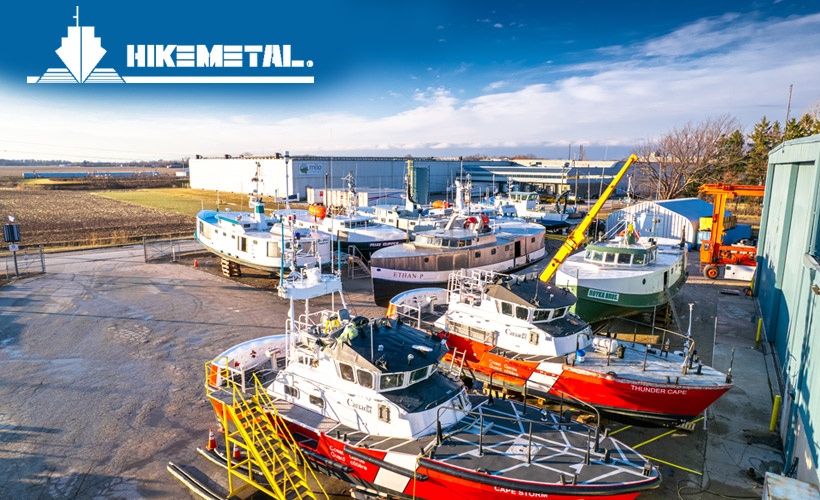
Look at finished projects that match your mission. Ask for drawings, class certificates, and vessel particulars from similar hulls, plus contacts for the crews running them. Facilities matter as much as experience. Shed size, lifting gear, and in-house trades decide whether the work stays in one yard. A yard that also handles fleet ship management saves the customer a second search when refit time arrives. Hike Metal Products runs climate-controlled shops for vessels up to 100 feet, a full machine shop, a 100-ton travel lift, and in-house hydraulics, electrical, electronics, fabrication, and paint crews.
Structure Milestone Payments
Tie payments to real progress instead of calendar dates. Keel laying, hull closure, machinery installation, and passed sea trials each give both sides something measurable. This approach supports cost optimization, because you pay for finished work rather than for time passing.
Order Long-Lead Items Early
Engines, generators, water jets, and specialized electronics take the longest to arrive. Tank layout and bunker capacity belong in that same early group. Most schedules slip because one major component shows up late, not because the welding runs slow.
Stage Three: Construction and Oversight
Once metal is cut, oversight falls to the buyer. Agencies usually assign a project representative or marine surveyor to visit the yard on a set schedule.
Verify Quality Through Scheduled Inspections
Inspections at the hull and dockside confirm that welds, alignment, and dimensions match the approved drawings. Catching a problem at the frame stage costs hours. Catching the same problem after outfitting costs weeks. Research buyers should check that deck layouts suit ocean technology testing gear before the frames close in.
Control Change Orders
Requirements shift during a long build. A revised deck layout or an added winch carries cost and schedule effects that spread into other systems. Even small changes such as vessel heads can reroute plumbing and ventilation through several compartments. Put every adjustment in writing as a change order with a priced impact attached.
Plan for a Realistic Build Duration
Custom vessels are built for one buyer, so none sit finished waiting for a purchase order. Simple aluminum workboats take several months. Classed steel hulls that break ice take much longer. Fleet renewal programs work best when the order sequence matches retirement dates, and agencies on multi-year fleet renewal budgets should confirm funding release dates before signing.
Stage Four: Trials, Certification, and Delivery
This stage turns a finished hull into a working vessel, with paperwork that proves it.
Run Dockside and Sea Trials
Trials test engines, steering, electrical systems, firefighting gear, and safety equipment under working loads. Bring a written checklist tied to the contract so every performance claim gets measured. Workboats should prove pump rates and vessel discharge performance. Science hulls add ocean technology testing runs for winches, A-frames, and sensor mounts.
Complete Regulatory Sign-Off
Class certificates, stability booklets, load line papers, and flag documents close the compliance file. Vessels entering commercial trade also need records that support cargo manifests and port clearance from the first voyage. Load the finished certificate set into your Fleet Database so renewal dates stay visible across the fleet.
Handle Handover and Training
A good handover covers more than keys and a signature. Expect:
- Crew orientation on every system, onsite and during the delivery voyage
- Complete drawing sets, operating manuals, and system schematics
- A logged inventory of spare parts and loose equipment
- Active warranties with named service contacts
- A written punch list with agreed completion dates
Total Cost Goes Beyond the Contract Price
Shipowners should compare builders on total cost of ownership, not the quoted price alone. Fuel burn at service speed, maintenance access, corrosion protection, and refit support all add up over decades. Shipowners and cargo owners in maritime logistics should also check how the hull fits their shipping services, logistics services, and warehouse storage at each port of call. Route planning around draft limits and berth availability shifts the economics of a design as much as engine choice does. Steel fishing tugs built here in the late 1950s still work the Great Lakes, and many aluminum vessels come back for full refits after 15 years instead of replacement.
Plan for Support After Delivery
Fleet ship management does not stop at handover. Shipowners need a yard that answers during a breakdown, and cargo owners need repair windows that fit sailing schedules. Keep fleet ship management, Ships Agency contacts, and repair scheduling under one plan so a single customer contact handles every call. That works best when the builder holds the drawings, since the crew that welded the frames can price a refit without starting a fresh survey.
Build Your Next Vessel With a Yard That Knows the Process
The Custom Vessel Procurement Process rewards shipowners who define the mission clearly, settle classification early, tie payments to milestones, and inspect throughout the build. Hike Metal Products supports agencies, fire services, research organizations, cargo owners, and commercial fleets at every stage, from engineering through sea trials and crew training. Every customer gets onsite instruction and delivery voyage training, so crews run the vessel with confidence from day one.
Call 519-825-4691 or email sales@hikemetal.com to talk through your requirements and get a detailed quotation.