Great Lakes Boat Construction demands specialized engineering for freshwater conditions, severe weather, and seasonal ice. The five interconnected lakes produce steep waves, short-interval chop, and harsh winter conditions that punish poorly built vessels.
Hike Metal has built custom boats and ships for these waters since 1958, delivering vessels that perform on Lake Erie, Lake Huron, Lake Ontario, Lake Michigan, and Lake Superior. The Great Lakes waterway boating market includes cargo barges, commercial fishing tugs, sailboat owners, and powerboat operators. This guide covers the design principles, materials, components, and regulations that shape vessel construction for the largest freshwater system in North America.
Why Great Lakes Conditions Demand Specialized Vessel Design
The Great Lakes generate wave patterns unlike any ocean environment. Shallow basins create steep, short-period waves that strike hulls with rapid impact. Storms can build six-foot to twelve-foot seas within hours. Winter ice forms across harbors and shipping lanes, requiring hulls strong enough to resist crushing pressure and scraping damage.
Freshwater behaves differently from saltwater. Salt speeds corrosion, while freshwater brings dissolved minerals, invasive zebra mussels, and big temperature swings that wear vessels down. Weather conditions like ice expansion, freeze-thaw cycles, and dockside humidity test every weld, fastener, and coating. Boats built for these waters must handle all of this while meeting strict commercial, government, and safety standards.
Hull Design for Freshwater Performance
Hull shape determines boat handling on the Great Lakes waterway. Builders favor deep-V hulls for stability and ride comfort. The sharper deadrise angle slices through steep waves instead of slamming flat against them.
High freeboard, the distance from waterline to deck edge, protects crew and equipment from boarding seas. Commercial fishing vessels, patrol boats, and research vessels operating on the lakes typically feature taller freeboard than their saltwater counterparts. Hike Metal designs each hull around the vessel’s mission, balancing freeboard, beam, draft, and displacement. The boat must perform in real working conditions, not just calm-water tests.
Self-bailing cockpits and watertight compartments add another safety layer. Steep waves can dump water across the deck, so efficient drainage prevents free-surface effect and keeps the vessel stable in heavy weather.
Material Selection for Great Lakes Vessels
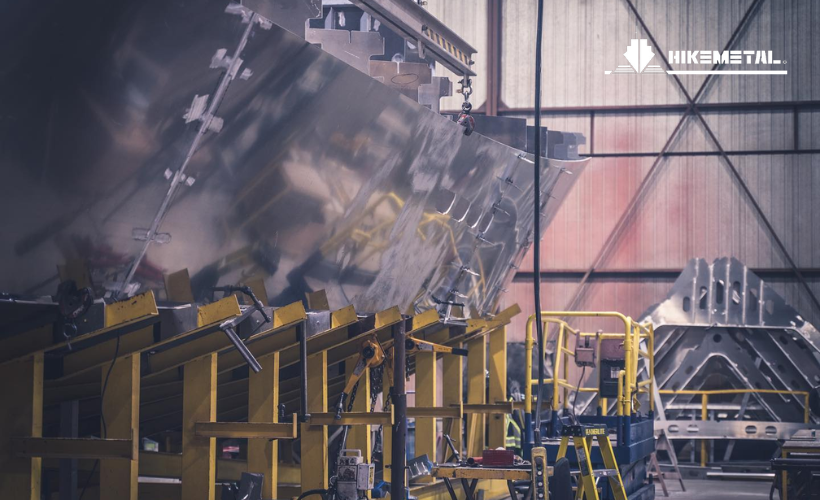
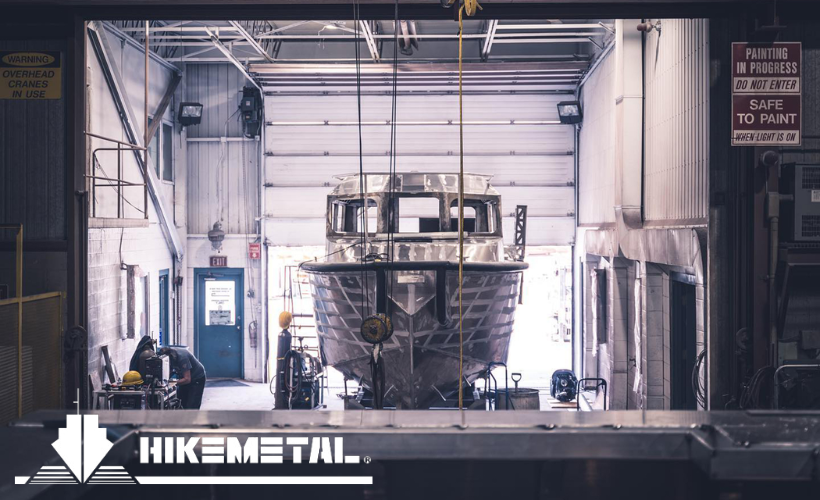
Material choice differs from ocean-going construction. It shapes durability, cost, maintenance, and lifespan. Hike Metal builds in steel, aluminum, and combinations of both, picking the right material for each project.
Aluminum Construction
Aluminum offers an excellent strength-to-weight ratio, corrosion resistance, and ice-handling capability. The metal flexes under impact rather than cracking, which suits patrol boats, search and rescue craft, and high-speed workboats. Aluminum hulls also need less maintenance than steel because they resist freshwater oxidation without heavy coatings.
Steel Construction
Steel remains the standard for heavy commercial vessels, fireboats, icebreakers, and large fishing boats. The material has been used in shipbuilding for over 150 years. A well-built steel hull can serve for a century with proper care. Steel offers:
- Superior strength for ice breaking and heavy commercial loads
- Stable, comfortable ride due to greater hull mass
- Easy field repair using common welding equipment
- Strong resistance to abrasion from docks, ice, and floating debris
- Long service life often exceeding 50 to 100 years
Specialized Components for Freshwater Operation
Building for the Great Lakes goes beyond hull shape and materials. Several components need special attention for freshwater service.
- Self-bailing cockpits drain heavy seas quickly without manual pumping
- Reinforced fendering protects hulls from concrete dock walls at marinas, cargo ports, and marina facilities along the Great Lakes waterway
- Ice belts add steel plating at the waterline for vessels operating in early spring or late fall
- Heated piping systems prevent freezing during winter operations
- High-capacity bilge pumps handle storm conditions and emergency dewatering
- Strong rub rails withstand repeated contact with steel-piled docks
Ice considerations matter most for vessels working through freeze-up or break-up periods. Hike Metal has built fireboats that break 12 inches of first-year ice at 3 knots, supporting year-round operation in cities like Chicago. Icebreakers built for the Government of Canada include further structural reinforcements for thicker pack ice, serving cargo traffic and the regional boating market through winter.
Required Safety Equipment
Transport Canada and the U.S. Coast Guard set standards for every freshwater vessel. Required marine safety gear includes life saving devices for each person aboard, visual signaling devices like flares, a sound signaling device for fog, and communication equipment for ship-to-shore contact. Hike Metal installs this equipment during construction, including for boats running between launch ramp sites and remote fishing grounds.
Corrosion Protection in Freshwater Environments
Ocean-going hulls face constant saltwater attack. Freshwater corrodes more slowly, but it still attacks metals through galvanic action, oxygen exposure, and microbial growth. Effective protection needs the right material pairings to avoid galvanic cells, sacrificial anodes set up for freshwater chemistry, and coating systems matched to the operating environment.
Powder coatings, epoxy primers, and antifouling paints designed for freshwater extend hull life by years. Regular hull inspections catch problems before they become structural issues. Hike Metal’s 100-ton travel lift on the north shore of Lake Erie makes those inspections easier.
Vessel Types Built for Great Lakes Service
Different missions across the Great Lakes waterway call for different freshwater boats. A commercial fishing tug serving the boating market out of Lake Erie marinas has different needs than a Coast Guard patrol vessel covering Lake Superior. Hike Metal has delivered every major category of working vessel for these waters.
Commercial Fishing Vessels
Fish tugs working the Great Lakes face heavy gear loads, long days in rough water, and tight harbor maneuvering. Steel construction, deep-V hulls, and reinforced decks support netting operations across all four seasons. Hike Metal services most fish tugs along the Great Lakes waterway through its 100-ton travel lift and dockside facilities.
Government and Patrol Vessels
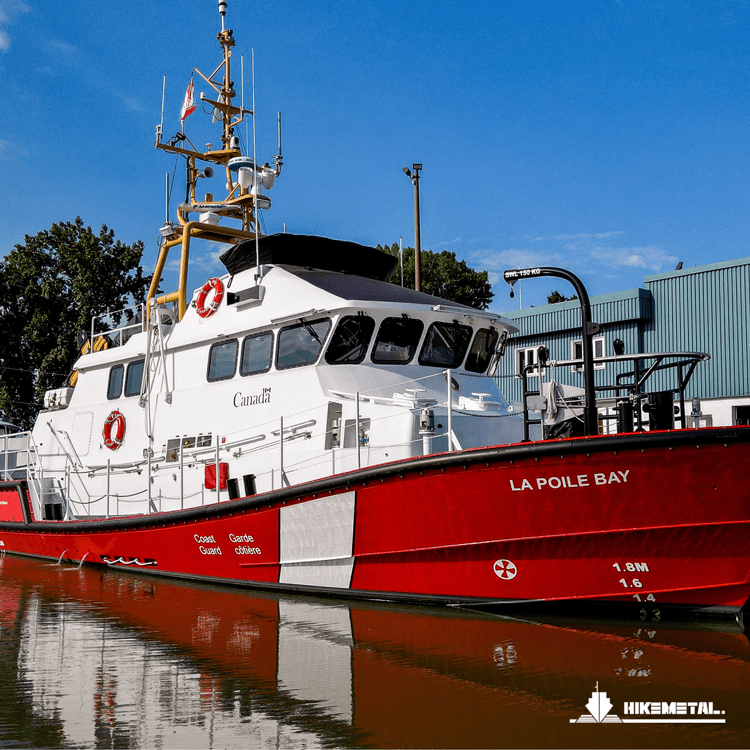
The Canadian Coast Guard, RCMP, police boats, and fire departments operate vessels built for emergencies anywhere on the lakes. These boats need speed, endurance, and the ability to launch in any weather, responding from marinas to open water. The CCG Vessel Shark, a 52.7-foot semi-displacement steel patrol boat, shows how engineering choices match operational requirements.
Research and Specialty Vessels
Scientific research vessels carry sensitive equipment and work in remote areas of the lakes. Stable platforms, quiet propulsion systems, and proper accommodation for crew and researchers shape the design. The Great Lakes boating community also relies on these methods for survey hulls and specialty work.
Regulatory Standards and Safety Compliance
Vessels on the Great Lakes and connected waterways must meet several regulatory frameworks. Boats transiting the St. Lawrence Seaway follow specific design regulations covering structural integrity, listing prevention, navigation equipment, and clearance under suspension bridges along the river. Transport Canada requires inspections at construction milestones, with separate rules for vessels over or under 24 meters.
Many commercial and government vessels also meet classification society standards from the American Bureau of Shipping (ABS) and Lloyds Register (LR). These certifications confirm the vessel meets recognized engineering and safety benchmarks. Hike Metal builds to all these standards, with documented inspections and functional testing at its waterfront facility on Lake Erie.
Build Your Vessel With a Trusted Canadian Shipbuilder Since 1958
Great Lakes Boat Construction calls for a builder who knows the lakes, the regulations, and the realities of working freshwater vessels. Hike Metal, based in Wheatley, Ontario on the north shore of Lake Erie, has served the Canadian Coast Guard, RCMP, commercial fishing fleets, fire services, and research organizations since 1958.
The Hike Metal Shipyard in Wheatley Ontario runs a full marine yard with climate-controlled facilities for vessels up to 100 feet, where master boat builders combine traditional craftsmanship with modern engineering. The company serves the boating market across Canada and the United States, from the Detroit River and St. Lawrence River corridor to every major Great Lakes port.
Whether you need a patrol boat, a fishing tug, an icebreaker, a fireboat, or a research vessel, contact Hike Metal at 519-825-4691 or sales@hikemetal.com.