Canadian vessel builders hold a distinct advantage in the global shipbuilding market. Decades of engineering for extreme conditions, strict regulatory standards, and deep expertise in aluminum and steel construction set them apart. The National Shipbuilding Strategy (NSS) adds long-term stability that few countries can match. Government agencies, commercial fishing operators, and marine research organizations choose Canadian builders for vessels that perform reliably in the harshest environments on earth.
The National Shipbuilding Strategy Creates Stability
Canada’s shipbuilding industry suffered from boom-and-bust cycles for decades. From the mid-1990s to 2010, Canadian shipyards became outdated. Skilled workers left. Raw materials suppliers lost their primary domestic customers.
The NSS changed that trajectory. Launched in 2010, it provides a multi-decade commitment to domestic vessel construction. The strategy established long-term relationships with three large-vessel shipyards: Irving Shipbuilding in Halifax, Seaspan Shipyards in North Vancouver, British Columbia, and Chantier Davie in Lévis, Quebec. Each yard has invested hundreds of millions of dollars to upgrade facilities and restore the shipbuilding industry after nearly two decades of decline.
NSS contracts contribute nearly $6 billion in gross domestic product and maintain an average of 6,100 jobs per year. The strategy has become a pillar of Canada’s economic infrastructure, generating employment opportunities across every province. Canadian shipbuilding now attracts sustained investment because any cost premium from domestic construction is offset by tax revenues and jobs at every level of government.
Ice-Capable Engineering Sets the Standard
Canada’s geography demands vessels that operate in ice. Canadian vessel builders design hulls and propulsion systems for first-year ice, brash ice, and multi-year ice conditions. The Arctic and Offshore Patrol Ships (AOPS) built under the NSS cut through 1.2 metres of ice. These vessels patrol the Canadian Arctic, protect northern shipping routes, and support Arctic defense drills that reinforce sovereignty over polar waters.
Seaspan Shipyards will build a Polar Icebreaker for the Canadian Coast Guard which is the flagship of the national icebreaking fleet. At 150 metres long, this vessel will operate farther north and for longer periods than any icebreaker Canada has deployed. Combined with the AOPS fleet and existing icebreaking vessels, this program positions Canada as an icebreaking superpower.
Ice-class knowledge transfers to every build. A hull designed to break 12 inches of ice at 3 knots delivers superior structural integrity in any sea state. Reinforced framing and optimized hull geometry carry over to patrol boats, research vessels, and commercial fishing boats. Few shipbuilding nations match this cold-water expertise.

Regulatory Standards and Workforce Excellence
Transport Canada enforces some of the strictest marine safety standards in the world. Canadian vessel builders meet requirements from the American Bureau of Shipping (ABS) and Lloyd’s Register (LR). This regulatory environment creates internal quality systems that exceed minimum standards. Procurement officers at the Canadian Coast Guard, RCMP, and municipal fire departments rely on this framework.
The workforce behind these vessels is equally strong. Red Seal Trade certifications, apprenticeship programs, and college partnerships produce skilled tradespeople across the country. The Canadian marine industry employs workers in STEM fields at 2.5 times the rate of total manufacturing. Irving Shipbuilding’s Halifax Shipyard reports attrition below 7 percent — less than half the industry average.
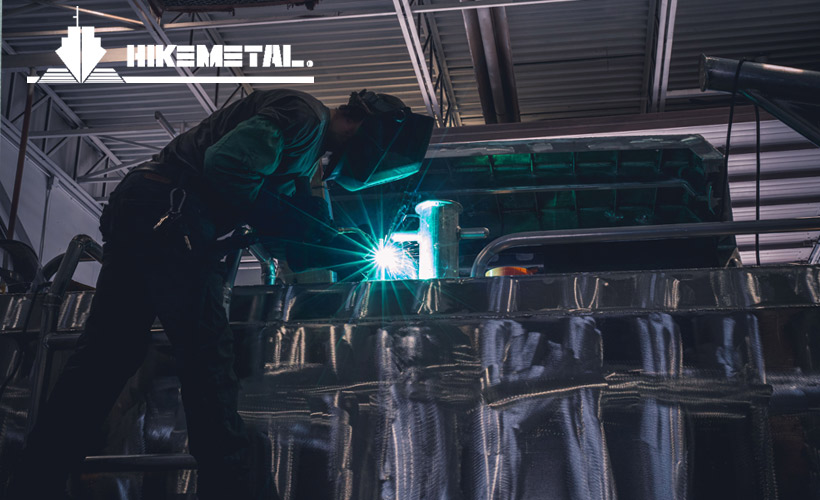
Hike Metal Products Limited, based in Wheatley, Ontario, maintains a “family” of Master Boat Builders. Many skilled workers have been with the company since its early years. This generational transfer of knowledge, from aluminum welding to marine electrical systems, cannot be replicated through short-term contract labour. The permanent teams at Hike Metal catch errors early, suggest improvements, and take personal ownership of quality.
Aluminum Construction and Material Expertise
Canadian vessel builders lead in aluminum construction for commercial and government applications. Aluminum offers a high strength-to-weight ratio, corrosion resistance, and lower lifecycle costs. These properties make it the preferred material for patrol boats, search and rescue lifeboats, fireboats, naval tugs, and high-speed passenger vessels. Aluminum vessels from Canadian builders often achieve a 40-plus year lifespan.
Hike Metal exemplifies this expertise. Since 1958, Hike Metal has built vessels for the Canadian Coast Guard, RCMP, police departments, fire services, and commercial fishing fleets. Their facility includes climate-controlled bays for vessels up to 100 feet, a full machine shop, and a 100-ton travel lift. Hike Metal also maintains deep heritage in steel construction. Steel fishing tugs built in the early decades remain in active service today. This dual-material capability lets Hike Metal recommend the right material for each application.

Innovation and Purpose-Built Design
Canadian vessel builders adopt advanced marine technologies to stay competitive. Hybrid electrical propulsion systems and low-carbon fuels position Canadian builders at the front of the global sustainability shift. These advances apply to everything from search and rescue lifeboats to Multi-Purpose Vessel platforms used by Canada’s federal fleet. Digital twin technology allows shipyards to model vessels virtually before cutting metal.
Every vessel starts with a specific operational requirement. A patrol boat for the RCMP carries the right communications equipment, weapons storage, and pursuit speed. Combat vessels built for the Canadian Navy include systems for intelligence gathering and coastal defence. Search and rescue lifeboats built by Canadian yards save lives in the roughest waters on the planet.
Seaspan’s Offshore Fisheries Science Vessels support scientific exploration, fish stock monitoring, and climate change research for Fisheries and Oceans Canada. The NSS also requires Canadian shipyards to invest 0.5 percent of contract values back into the Canadian marine industry through the Value Proposition program.
Vessel life extension work adds another dimension. Rather than scrap aging vessels, Canadian builders refit and modernize them to current standards. This extends service life by 15 to 20 years at a fraction of new-build cost.
Sovereignty, Security, and Supply Chain Strength
Canada operates the longest coastline in the world, spanning three oceans. The ability to build, maintain, and repair vessels domestically is a national security priority.
The Royal Canadian Navy depends on domestic yards for vessel repair and fleet modernization. The aging Halifax-class frigates require ongoing vessel life extension work until replacements arrive. Joint support ships like HMCS Protecteur, built by Seaspan Vancouver Shipyards in British Columbia, replace critical at-sea replenishment capacity for the Canadian Navy.
Hike Metal’s facilities on Lake Erie serve this same rapid-response role for the Great Lakes commercial fishing fleet. Their location near Detroit and Windsor places the company within hours of engine manufacturers and marine equipment distributors. Proximity to steel and aluminum suppliers in Ontario, Michigan, and Ohio reduces lead times. Direct access to the St. Lawrence Seaway enables global delivery.
The Competitive Landscape Favours Canadian Expertise
Compared to US shipyards, Canadian builders offer competitive pricing, shorter lead times for mid-size vessels, and direct Arctic experience. The Canadian Navy benefits from this domestic capacity. Mid-size Canadian vessel builders like Hike Metal fill a critical role, delivering custom vessels in the 30- to 100-foot range with the flexibility and fast production timelines that define the Canadian mid-size builder.
Canada ranks sixth worldwide in the shipbuilding industry and supports approximately 9,000 jobs. The combination of regulatory expertise, construction capability, ice-class engineering, and a skilled permanent workforce makes Canadian vessel builders the top choice for organizations that depend on vessel performance and reliability.
Build With a Proven Canadian Vessel Builder
Organizations that require custom commercial or government vessels benefit from working with experienced Canadian vessel builders. Hike Metal Products brings over six decades of custom vessel construction to every project. From initial consultation through launch, their team delivers vessels built to classification standards and designed for decades of reliable service.
Contact Hike Metal at 519-825-4691 or email sales@hikemetal.com to discuss your next vessel project.