Choosing between Steel vs Aluminum Hulls is one of the first decisions a fleet owner makes on a new build. That choice shapes everything that follows. The hull material affects performance, fuel efficiency, repair options, maintenance schedules and ice handling. Each metal has its strengths, and neither wins every job. The right answer depends on where the vessel works, what it carries and how long you plan to keep it. Hike Metal Products has built steel, aluminum and hybrid vessels in Wheatley, Ontario, since 1958. This guide covers the questions that decide the choice.
Steel vs Aluminum Hulls at a Glance
Most buyers start with a shortlist of trade-offs. This is a metal construction guide, so it does not cover composite materials such as glass-reinforced plastic (GRP) or carbon fibre. Compare both metals on these six factors before you request a quote:
- Impact and ice exposure: how often the hull will hit ice, debris or hard docks
- Weight and payload: how much speed, cargo or passenger capacity the role demands
- Upfront cost: material, labour and finishing for your custom design
- Corrosion control: coating systems for steel, electrical isolation for aluminum
- Repair access: which yards near your operating area can work on the hull
- Ride comfort and stability: how the vessel behaves in your typical sea state
Each factor can shift the advantage between metals. A patrol boat, a fish tug and a passenger vessel will weigh them differently. Pick your top priority first. Then ask your builder to run the numbers for your design, not general rules.
How Each Metal Handles Impact, Ice and Abrasion
Fleet owners on the Great Lakes, the St. Lawrence and northern waters often raise impact first. Ask how each metal and its hull design will handle the loads your vessel faces. Compare impact resistance and durability side by side.
Steel and Impact Loads
Hike Metal Products builds many of its workhorse hulls in steel. One example is a heavy-duty fireboat with a steel hull, built for year-round service on a Great Lakes waterfront. It breaks up to 12 inches of first-year ice at 3 knots.
Will your vessel work in ice? Ask Transport Canada and your classification society which ice-class requirements apply. Do this before design work begins. Abrasion also needs attention if the hull works against rough docks, rock or ice. Ask how each metal will wear in your conditions, how the design resists dents and how much margin it allows.
Aluminum and Stiffness-Based Design
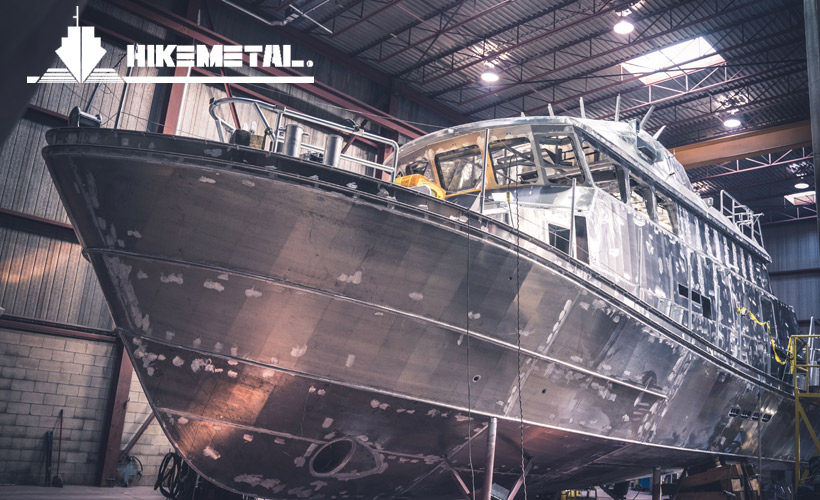
Aluminum hulls follow their own design approach. Ask your builder how the design handles plate thickness, weld zones and structural components. Ask how it controls fatigue around engine beds, and which classification rules it follows. Hike Metal Products handles the engineering and fabrication of aluminum structures in-house. The team that designs the hull also builds it.
Weight, Speed and Fuel Burn
Many buyers ask about aluminum to save weight. A lighter hull can change engine power, top speed, acceleration, range and payload. Fast patrol boats, search and rescue craft and passenger tour boats often start the conversation here.
Ask for a weight estimate in both metals. Then compare the engine size, fuel economy, cruising speeds and payload each version supports. Also ask how vessel size changes the performance comparison for your hull.
Think about the crew as well. A heavier hull and a lighter hull can move differently in a short, steep chop. If your crew works long shifts aboard, ask how each design affects ride quality, centre of gravity and seaworthiness in your usual conditions.
Corrosion in Great Lakes and Saltwater Service
Every hull needs a corrosion plan. Tell your builder where the vessel will work: Great Lakes freshwater, coastal saltwater or both. Then ask how that changes the plan.
Coating Care for Steel Hulls
Ask which coating system the builder uses above and below the waterline. Ask how much regular maintenance it needs over the vessel’s expected service life. For hull inspection requirements, check with Transport Canada and the terms of your vessel’s certificate. Hike Metal Products has its own fabrication and repainting crews, so coating repairs and refits happen under one roof.
Electrical Isolation for Aluminum Hulls
Ask how the builder prevents galvanic corrosion and isolates dissimilar metals. Ask how the design protects the hull from stray current, and which anodes and antifouling paint suit your waters. Confirm product approvals and antifouling rules with Health Canada and Transport Canada. Hike Metal Products employs electrical, electronics and hydraulics specialists. They plan the wiring, equipment, fittings and hull together.
Upfront Cost, Repairs and Lifecycle Value
Price comparisons between the two metals can mislead. Material cost is only one line in the quote. Labour, finishing, paint and shop time all change the total. Metal markets and trade measures also shift. Ask for a current quote in both materials, and ask about each material’s impact on resale value.
Repair access matters just as much. Before you purchase, find out which yards near your operating area can handle structural repairs on your hull. Ask what qualifications their welders hold. A hull that is cheap to build but hard to fix far from home can cost you weeks of lost work.
Long-term ownership costs are where a builder relationship pays off. Hike Metal Products often sees its boats return after about 15 years for a full refurbishment. The team reviews the vessel’s condition, outlines the work it needs and checks which requirements have changed since the original build. Engine upgrades are among the most common refit jobs. Ask Transport Canada which current standards apply to your refit or repower. The Wheatley yard also offers:
- A 100-ton travel lift that can pull most fish tugs working the Great Lakes, on standby 24/7 for emergencies
- Complete dockside facilities for refits and repairs that do not need a haul-out
- Remote service across Canada when a vessel cannot travel to the yard
Which Hull Material Fits Your Operating Profile?
Your operating profile, not a general rule, should decide your material of choice. Speed, ice exposure, payload, crew size and service area can each favour one metal or a mix of both. The three builds below show how Hike Metal Products weighed the strengths and disadvantages of each metal against the mission.
Where Hike Metal Products Has Built in Steel
The company built a government vessel measuring 52.7 feet (16.06 metres). It has a steel semi-displacement hull, twin screw propellers and a design speed of 16 knots. The steel-hull fireboat described earlier is a second example.
Where Hike Metal Products Has Built in Aluminum
For a tour operator on northern Lake Huron, the team built a 50-foot high-speed RHIB. It has an aluminum deep V hull and an aluminum superstructure, and it carries 83 passengers plus 2 crew. A maintenance-free foam collar replaces the usual inflatable tube. The vessel has a 14-hour range.
The Hybrid Option: Steel Hull, Aluminum Superstructure
Some roles call for both metals. The fireboat pairs its steel hull with an aluminum superstructure. It runs with a crew of 5, which rises to 10 for firefighting. It also handles diving support, search and rescue, and distress response for recreational boaters. If a hybrid build interests you, ask how the design joins the two metals and protects that joint from corrosion.
Plan Your Next Hull With Hike Metal Products
The best hull material is the one that fits your work. The right builder helps you prove it before construction starts. Hike Metal Products builds custom vessels up to 100 feet in climate-controlled facilities with a full onsite machine shop. The yard sits on the north shore of Lake Erie, with direct access to the St. Lawrence Seaway, and delivers vessels across Canada and beyond. Every project follows six steps:
- Initial meeting on size, function and special needs
- Requirement review and production planning
- Design and layout with ongoing client input
- Detailed quotation for your approval
- Production on a strict schedule
- Launch, delivery and hands-on crew training
Ready to settle the Steel vs Aluminum Hulls question for your next build? Call Hike Metal Products at 519-825-4691 or email sales@hikemetal.com to book a consultation. The team will match the right hull to your fleet’s mission.