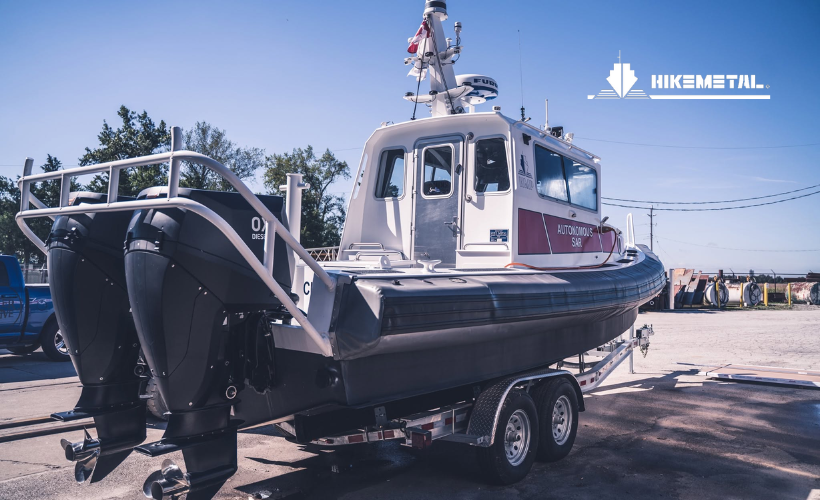
Autonomous vessels are moving from research trials into real buying plans for patrol, survey and monitoring work in Canada. The appeal is simple: longer missions, less risk to crews in rough water and steady data collection. The legal side takes more planning. In Canada, a small uncrewed vessel needs an exemption from Canadian marine regulation before it leaves the dock. This guide covers definitions, Transport Canada oversight and what to settle before fabrication starts. Hike Metal Products has built steel and aluminum work boats in Wheatley, Ontario since 1958.
What Counts as an Autonomous Vessel
An autonomous vessel is a ship that can operate, to a varying degree, without human interaction. The International Maritime Organization (IMO) calls these ships Maritime Autonomous Surface Ships, or MASS. A ship counts as MASS when autonomous or remote technology replaces or supports tasks that crew members normally do on board. Smaller craft are often called uncrewed or unmanned surface vessels (USVs). IMO sets out four degrees of autonomy:
- Degree one: seafarers on board, with some automated processes and decision support
- Degree two: remotely controlled, with seafarers still on board
- Degree three: remotely controlled, with no seafarers on board
- Degree four: fully autonomous, where the ship’s own systems make decisions
Many work boats already use dynamic positioning, autopilot track-keeping or joystick control to help a crew that is still aboard. Canadian regulation treats degree three differently, because nobody is on board to take over. Decide on your degree of autonomy first, because it shapes the control systems, sensors and wiring built into the hull.
The Legal Reality in Canada: No Automatic Approvals
Transport Canada approves uncrewed operation one vessel at a time. Each request goes through an exemption process run by the Marine Technical Review Board.
Which Vessels the Small MASS Policy Covers
Transport Canada’s Tier I policy on small MASS covers vessels at degree three or four of autonomy. The vessel must be no more than 12 metres long or no more than 15 gross tonnage. Larger uncrewed projects fall outside this policy, so talk to the regulator early.
The Authorized Representative’s Role
The Canada Shipping Act, 2001 requires every Canadian vessel to have an Authorized Representative (AR). The AR is the person responsible for matters relating to the vessel. For a small MASS, the AR must apply to the Marine Technical Review Board (MTRB) for an exemption before the vessel operates. After approval, the AR also handles the reporting and notice duties.
One narrow exception exists. A vessel under 2 metres long that weighs no more than 100 kg can skip the risk analysis and MTRB application. It must stay within sight of a qualified operator and run only in daylight with good visibility. A commercial or government build will almost always need the full process.
Technical Mandates for the Build
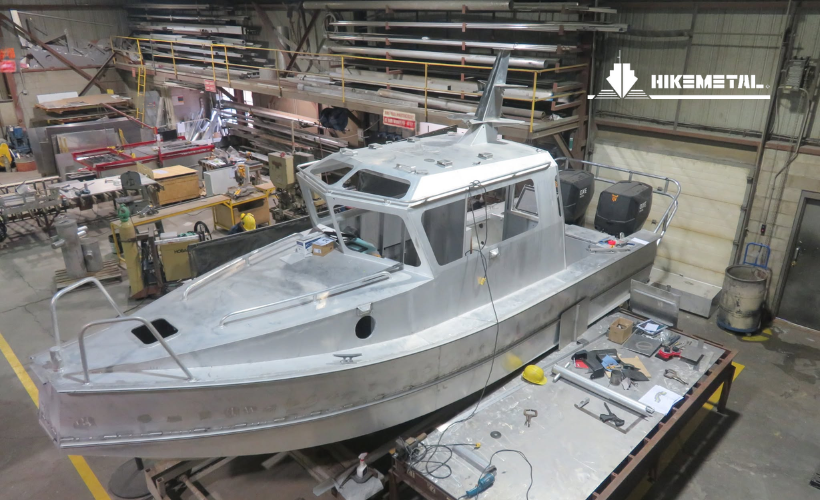
The small MASS policy sets equipment and staffing rules that affect the design from the first drawings. Planning for them early avoids costly changes after the hull is built.
Hardware Planning
The policy calls for a Class A or Class B Automatic Identification System (AIS). AIS gives the vessel a distinct signal that other traffic can receive. The MTRB application must also describe the collision avoidance system. That system should follow the same collision rules (COLREGs) as a crewed vessel. Both systems need electricity, antenna locations and protected cable runs. These are far easier to plan into a new hull than to add later.
The vessel also needs a sensor suite for situational awareness. Radar, lidar, GPS and visual and thermal cameras feed the software that steers the vessel. Some systems use machine learning to sort what the sensors detect.
Plan for a manual override as well. It lets an operator take direct control at any moment. The policy does not list it as a requirement, but it is sound practice on any uncrewed platform.
Operational Requirements
The policy requires a qualified individual at the control centre at all times. That operator must hold the right Certificate of Competency. The AR must also keep a shore-side safety management system.
A remotely operated vessel relies on radio, cellular or satellite links. If a link drops, is jammed or is compromised, the vessel can lose control. False GPS signals, known as spoofing, are a related risk. The small MASS policy does not set a specific cyber standard. Even so, encrypted links, separate control networks and a clear loss-of-link plan are sensible design choices. Our marine and naval engineering team can plan these systems with the hull structure, so space and power are reserved from the start.
Compliance Steps Before Fabrication Starts
Approval takes time, so plan this sequence into your schedule:
- Define the mission. Set the purpose, operating areas, schedule and sea state limits.
- Complete a risk assessment. Transport Canada expects it to follow a suitable standard, such as a recognized industry code of practice for MASS.
- Prepare the MTRB package. Include design details, AIS specifications, the safety management system, emergency plans, crew competency, collision avoidance details and a pollution response plan.
- Get the exemption. The AR must have approval before the vessel operates.
- Notify the Coast Guard. Tell the local Canadian Coast Guard 48 hours before each operation.
- Report and keep records. Report incidents right away and keep operating records ready on request.
The Coast Guard notice lists the vessel description, AIS type, MMSI number, operating area, timeline, course and speed, plus a 24-hour contact. Incident reports go to the nearest Transport Canada Centre or to Canadian Coast Guard Marine Communications and Traffic Services. Registration and insurance still apply on top of the exemption. Our guide to registering and insuring your custom vessel covers them.
Vessel Roles Suited to Autonomy
Removing the crew does not suit every mission. A commercial fishing boat, for example, still needs hands on deck to work its gear. Autonomy fits best on long-endurance, repetitive or hazardous tasks, where an individual on board adds risk or cost but little value. Hydrographic, oceanographic and environmental survey is a strong match, because a vessel can run precise survey lines for hours. Security patrol, harbour monitoring and research sampling also suit uncrewed operation. See our survey vessels and custom patrol boats.
The hull and systems under the autonomy package still decide whether a mission succeeds. Hull form, stability, electricity generation, payload space and maintenance access all limit what the software can do. A hull that pitches hard in a short Great Lakes chop will spoil sensor data, however good the control system is. If the vessel must also run with a crew aboard, plan the wheelhouse layout, safety equipment and accommodation for both modes.
Designing for the IMO MASS Code
International regulation has now arrived. In May 2026, IMO’s Maritime Safety Committee adopted a goal-based MASS Code. The code starts as non-mandatory, and IMO’s roadmap points to a mandatory version later. Canada gives effect to IMO convention obligations through the Canada Shipping Act, 2001. Owners should expect Canadian requirements to keep developing.
The practical answer is to design for change. Leave spare power, space and cabling. Keep control and communication systems upgradeable. A vessel built this way is easier to bring into line with new regulation and simpler to explain to regulators and insurers later in its life.
Autonomous Vessels FAQ
Can I operate an uncrewed vessel in Canada without an exemption?
In most cases, no. Under current regulation, a small MASS at degree three or four needs an MTRB exemption before it operates.
Can an existing hull be converted for remote operation?
It depends on the hull. Conversion adds control systems, sensors, wiring, power and AIS. It also needs the same exemption as a new build. A retrofit assessment shows whether the hull, power plant and layout can support the change.
Plan Your Autonomous-Ready Build with Hike Metal Products
Hike Metal Products builds steel and aluminum vessels for government agencies, police services and commercial fleets across Canada. Our team can review your mission, the approval path and the platform needs before fabrication begins, so the hull is ready for your systems. Explore our new custom boat builds or contact us directly:
- Phone: 519-825-4691
- Email: sales@hikemetal.com
Start the conversation early, and your plans for autonomous vessels will rest on a platform built for the work.